

Creating a home workspace that feels relaxing and inviting is essential for maintaining productivity and comfort during work hours. As more people embrace remote work, the need to design a space that encourages focus without compromising relaxation has never been greater. Whether you have a dedicated room or just a small corner in your home, there are many ways to optimize your workspace for better efficiency and well-being.
Why a Relaxing Workspace Matters
A workspace that promotes calm and concentration helps reduce stress and mental fatigue. When your environment feels cluttered or uncomfortable, it can distract you, lower your motivation, and hinder your output. On the other hand, a thoughtfully designed space can boost your mood, creativity, and overall satisfaction with your work routine.
Choosing the Right Location
Assess Your Available Space
Start by picking the area in your home that best suits your work needs. Ideally, this place should:
– Minimize distractions and noise
– Have good natural light
– Be separate from leisure or sleeping areas
If you don’t have a dedicated room, look for a corner or nook in the living room, bedroom, or even kitchen where you can set up your essentials.
Consider Privacy and Noise Control
If you live with family or roommates, think about how to manage interruptions. Using noise-canceling headphones or soundproofing materials can help reduce background noise. Additionally, arranging your desk so you face away from household activity can improve focus.
Ergonomic Furniture Choices
Invest in a Comfortable Chair
Sitting for long periods requires a chair that supports your back and encourages good posture. Look for one with adjustable height, lumbar support, and cushioned seats to prevent discomfort.
Select a Suitable Desk
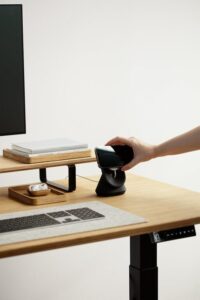
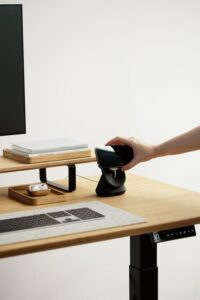
Your desk should be the right height to keep your arms at a 90-degree angle while typing. If possible, consider desks that can convert into standing desks to allow changes in posture throughout the day.
Optimize Lighting
Maximize Natural Light
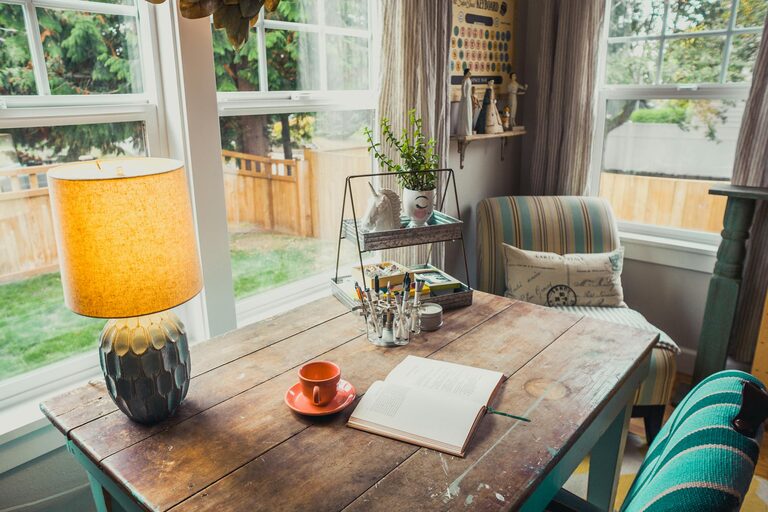
Natural light helps regulate your body’s internal clock and reduces eye strain. Position your desk near a window, but avoid glare on your screen.
Add Layered Lighting
Combine task lighting, such as desk lamps, with ambient lighting for a balanced effect. Adjustable lighting options can help you control brightness depending on the time of day.
Declutter and Organize
Keep Surfaces Clear
A tidy desk can enhance mental clarity. Use organizers, trays, or drawers to store supplies like pens, papers, and gadgets.
Use Cable Management Solutions
Loose cables create visual clutter and tangles. Cable clips, sleeves, or boxes help keep cords neat and out of the way.
Incorporate Storage Options
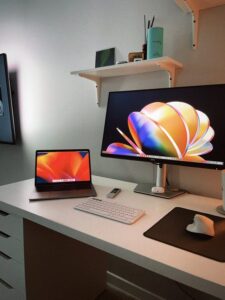
Shelves or filing cabinets nearby make it easier to store documents and supplies within reach without overcrowding your main work area.
Add Elements to Enhance Comfort and Calm
Include Plants
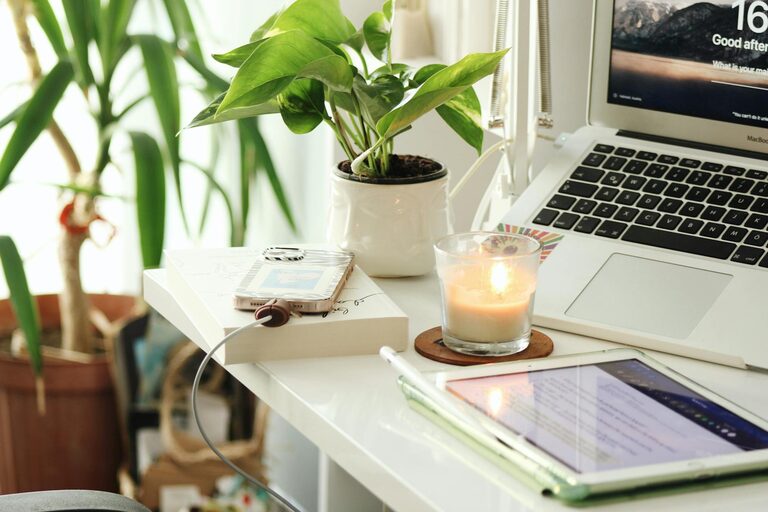
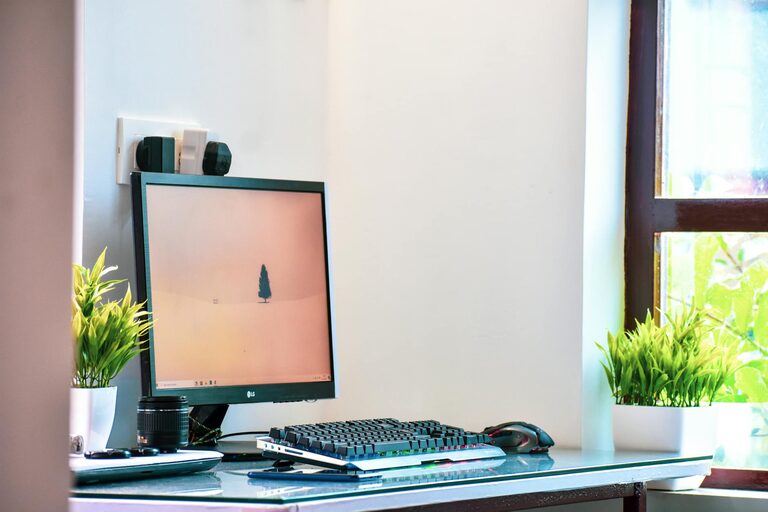
Adding greenery not only improves air quality but also provides a calming effect. Choose low-maintenance indoor plants suitable for your light conditions.
Personalize Mindfully
Decorate with items that inspire you but avoid excess decor that can distract. Motivational quotes, pictures, or small art pieces can create a pleasant atmosphere.
Use Soothing Colors
Colors affect mood and productivity. Soft tones like light blues, greens, or neutrals tend to create a relaxing environment ideal for focus.
Manage Technology Wisely
Select Essential Devices
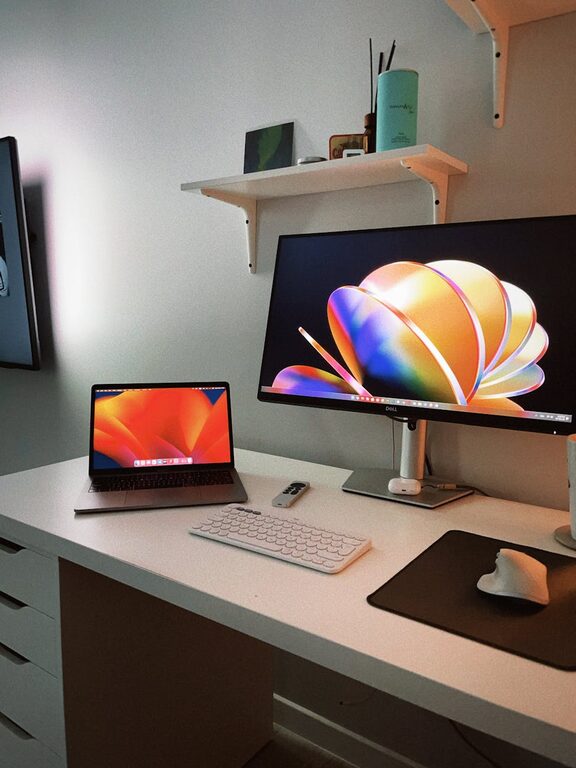
Keep only the necessary gadgets on your desk to avoid clutter. Wireless keyboards and mice often reduce cable mess.
Utilize Software Tools
Organize your digital workspace with apps for task management, time tracking, or note-taking to streamline workflows and reduce stress.
Establish Healthy Work Habits
Take Regular Breaks
Pause every hour for a few minutes to stretch, hydrate, and rest your eyes. This practice can prevent burnout and maintain energy levels.
Maintain Consistent Hours
Set clear working times to separate professional responsibilities from personal life, maintaining balance and reducing fatigue.
Final Thoughts
Designing a relaxing home workspace is about combining functionality with comfort. By paying attention to your physical environment and developing healthy habits, you can create a space that supports your productivity while making your workday more enjoyable. Take the time to personalize your workspace to suit your preferences, and don’t hesitate to adjust your setup as your needs evolve. With a little effort, your home office can become a place where productivity and peace go hand in hand.